China • Winery & Beverage Manufacturing
As yeast converts sugars into alcohol, significant metabolic heat is released — left unmanaged, tank temperatures rise quickly and affect yeast activity, aroma development and wine quality. The objective was a reliable cooling system holding stable fermentation temperatures throughout the entire production cycle while minimizing operating costs and simplifying maintenance.
The full plant layout — heat rejection, generation, distribution, and return — with live flow direction.
Alcoholic fermentation is an exothermic biological reaction — during peak yeast activity, tank temperatures can rise rapidly if heat isn't removed efficiently.
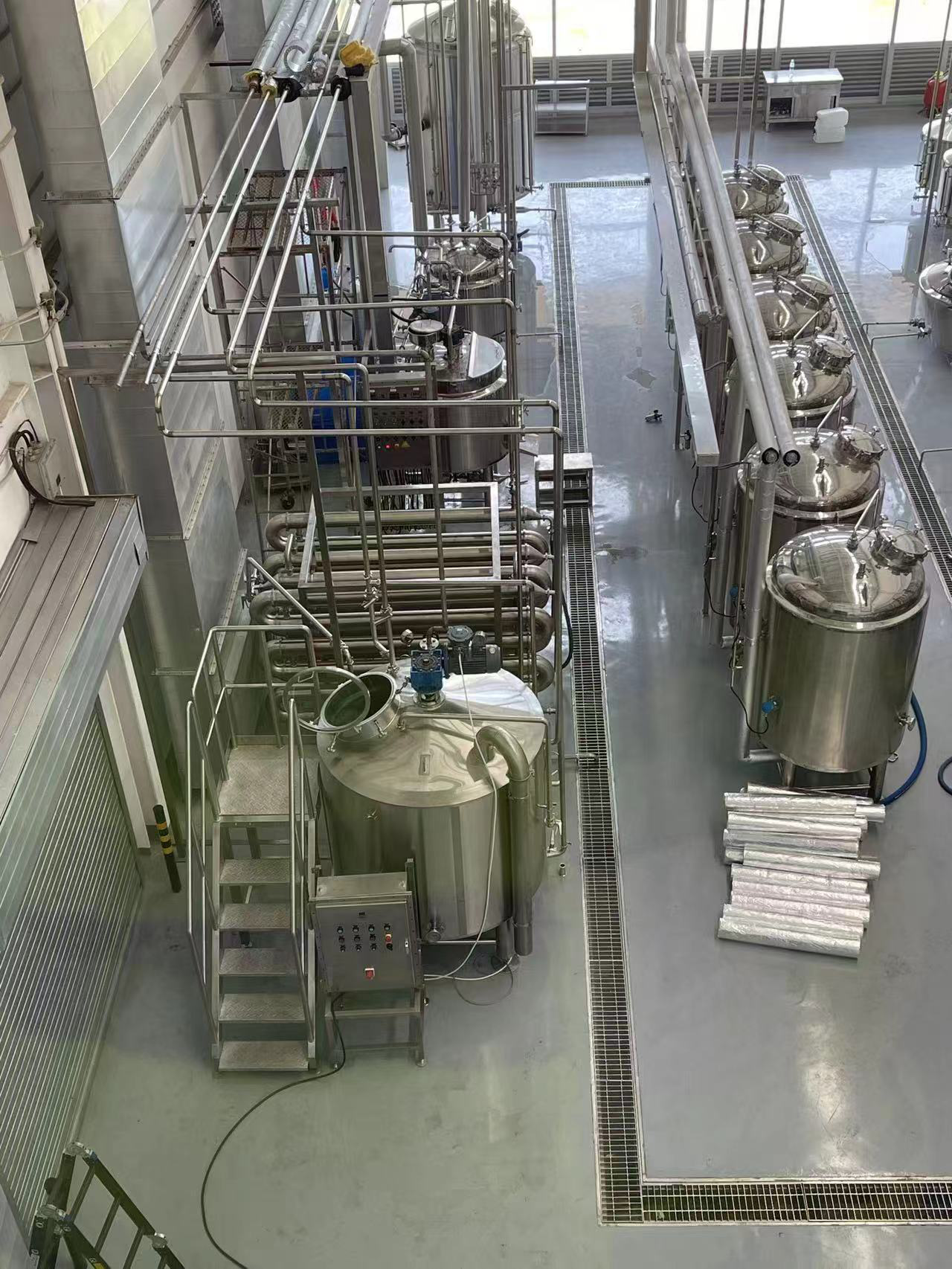
Variable heat generated during alcoholic fermentation across multiple stainless-steel wine tanks
Generate chilled water at a stable supply temperature, without a condenser water circuit or cooling tower
Stable chilled water production, high seasonal efficiency, low maintenance
Chilled water produced by the evaporator
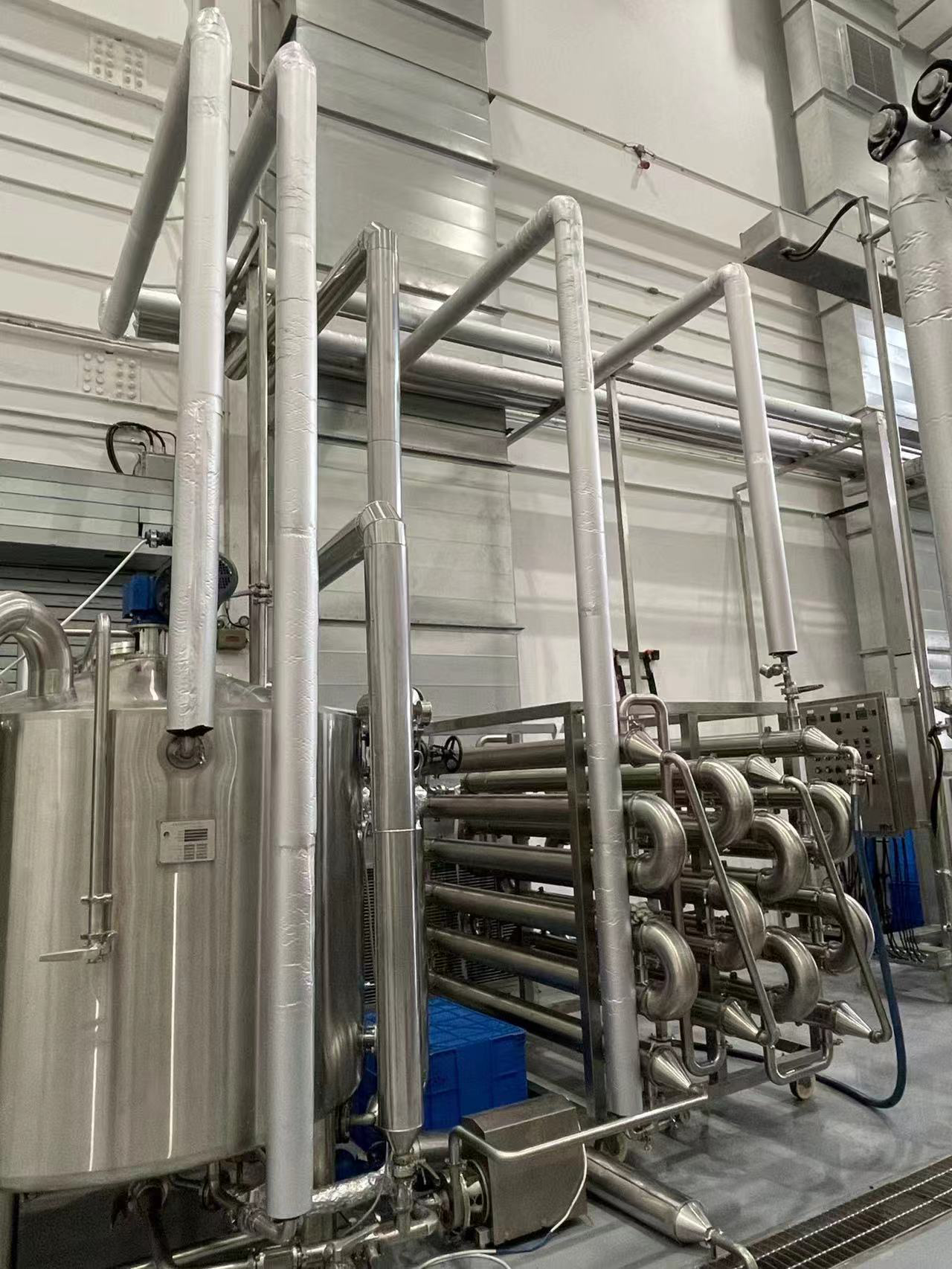
Distribute temperature-controlled water uniformly to every fermentation vessel through insulated piping
Uniform flow distribution, minimal temperature losses, stable hydraulics
Chilled water supplied from the distribution circuit
Remove fermentation heat by indirect exchange, with no contact between cooling water and wine
Uniform fermentation temperature, improved yeast performance, food-safe cooling
Continuous temperature feedback from every fermentation vessel
Automatically regulate cooling capacity to match the real thermal demand of each tank
Precise temperature regulation, reduced compressor wear, simplified operation
Temperature Sensors · Digital Controllers · Alarm Monitoring
Compressor Staging · Flow Regulation · Temperature Control
Circulation Pump · Distribution Header · Insulated Piping
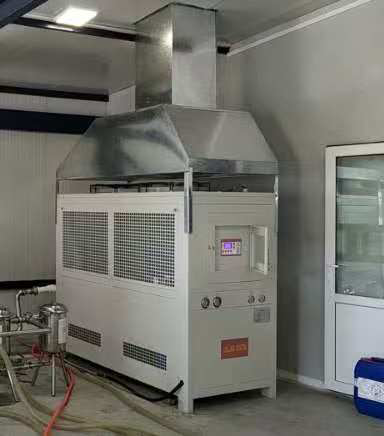
KA Scroll Chiller · Axial Condenser Fans
Design parameters, not live telemetry — figures reflect engineered targets for this system.
The winery needed a system installed quickly without added infrastructure such as condenser water piping or cooling towers, given moderate, highly seasonal cooling demand.
A KA Series Air-Cooled Scroll Chiller was selected as the central refrigeration plant.
Eliminates cooling tower installation, lowers installation cost and maintenance, with compact outdoor placement.
Wine must never contact refrigerant or industrial cooling water — direct cooling risks contamination and localized cold spots.
Each stainless-steel fermentation tank was fitted with an external cooling jacket connected to the chilled-water loop.
Hygienic, uniform indirect heat exchange with no contamination risk.
Continuous water consumption would raise operating costs and introduce scaling and corrosion problems.
Implement a completely closed chilled-water circuit.
Minimal water consumption, stable hydraulics, reduced corrosion.
Fermentation heat generation changes continuously as yeast activity progresses — manual control can't react quickly enough.
Install digital temperature sensors and controls that continuously regulate compressor staging and chilled-water circulation.
Stable fermentation temperatures, reduced energy use, longer compressor life.
Ratings below are a qualitative engineering assessment, not a measured benchmark — shown as a segmented meter rather than star icons to keep the framing technical.
Even small temperature variations can influence yeast activity, fermentation speed, aroma development and final sensory profile. Lohabour engineers analyze heat load, hydraulic requirements and future expansion plans to develop complete cooling architectures engineered for consistent, hygienic production.